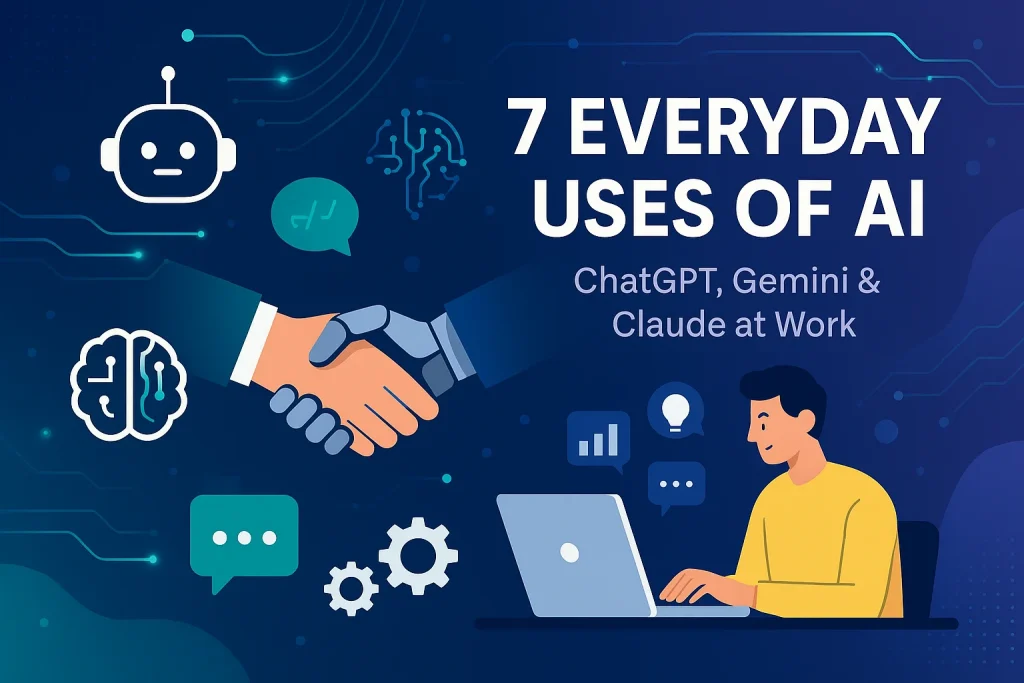
Artificial Intelligence (AI) has quickly moved from science fiction to daily reality. What was once reserved for advanced research labs is now embedded in how we write, shop, learn, and even socialize. Tools like ChatGPT, Google’s Gemini, and Anthropic’s Claude are no longer experimental novelties—they’ve become practical companions millions of people rely on every day.
But beyond the buzz, how exactly is AI transforming the way we live and work? Here are seven real-world ways AI is reshaping daily life in 2025.
1. Smarter Workflows and Productivity
AI assistants streamline tasks like drafting emails, summarizing reports, and generating code. Instead of spending hours on repetitive work, employees can focus on problem-solving and creativity.
💡 Example: A startup founder in Lagos can use ChatGPT to create pitch decks in minutes, freeing up time to focus on investor outreach.
2. Personalized Learning
AI tutors and apps adapt lessons to individual learning styles. Whether it’s French grammar, coding, or business finance, tools like Gemini now customize lessons in real time.
📈 Impact: Students who once struggled under rigid teaching methods now enjoy flexible, interactive learning experiences that match their pace.
3. Creative Boost for Writers and Designers
Rather than replacing creativity, AI amplifies it. Writers, musicians, and designers use AI for brainstorming, idea generation, and visual mockups.
💡 Example: Bloggers outline posts with ChatGPT while Canva’s AI tools help design visuals in minutes.
4. Customer Service That Never Sleeps
Businesses rely on AI-powered chatbots and voice bots to handle customer inquiries around the clock.
✅ Benefit: Faster responses, shorter wait times, and consistent support.
⚠️ Challenge: Striking the right balance between automation and genuine human empathy.
5. Smarter Online Shopping
E-commerce platforms use AI to suggest products based on browsing history, price preferences, and even voice searches.
💡 Example: Search for a budget smartphone, and the site instantly recommends models that fit your budget and location.
6. Healthcare at Your Fingertips
AI is accelerating medical decision-making. Doctors use AI to analyze scans quickly, track symptoms remotely, and create treatment plans. On the consumer side, apps powered by AI track diet, sleep, and fitness habits.
📈 Impact: Proactive healthcare, faster diagnoses, and earlier detection of potential health risks.
7. Everyday Communication
AI smooths communication by auto-translating texts, suggesting professional replies, and drafting posts. In multicultural regions like Africa, where dozens of languages are spoken daily, this has become especially powerful.
Challenges and Considerations
As AI grows, so do the challenges:
- Data Privacy: Who controls the data AI learns from?
- Job Displacement: How will industries adapt when machines take over repetitive tasks?
- Ethical Use: How do we ensure fairness and avoid bias in AI systems?
Governments and tech leaders are under increasing pressure to balance innovation with regulation.
Conclusion
AI is no longer futuristic—it’s woven into our everyday routines. From how we work and learn to how we shop and stay healthy, AI tools like ChatGPT, Gemini, and Claude are reshaping life in profound ways. The real question now isn’t whether to use AI, but how to use it responsibly.